HOW TO QUIT WEED WITHOUT WITHDRAWALS OR SLEEPLESS NIGHTS
PLUS: NATURAL WEED DETOX AT HOME
Nice Click…
Why? Simple…
Because if you’re anything like I was, you get high every day…
You’ve tried to quit weed before (honestly) and you’ve still failed. It doesn’t matter if you:
- Smoke weed
- Use Carts
- Vape THC
You probably already know there isn’t much help out there for us weed smokers…
…and, the longer you continue to smoke, the harder it is to quit weed:
So What’s The Good News?
You’ve just discovered, without a doubt, the most popular solution to quit weed that has helped over 20,000 people from 2009-2026. This guide helps weed smokers go from stoner to 100% clean, both in body and mind…
DISCOVER THE 3 CRITICAL REASONS PEOPLE CANNOT QUIT WEED FOR JUST 30 DAYS
1. STRONGER WEED
The active ingredient in weed (and the reason you smoke it) is THC, and the THC content in the weed you smoke is rising all the damn time. Some weed grown in 2026 is twice as strong as weed grown 10 years ago.
This isn’t even up for debate — weed is now a much harder drug.
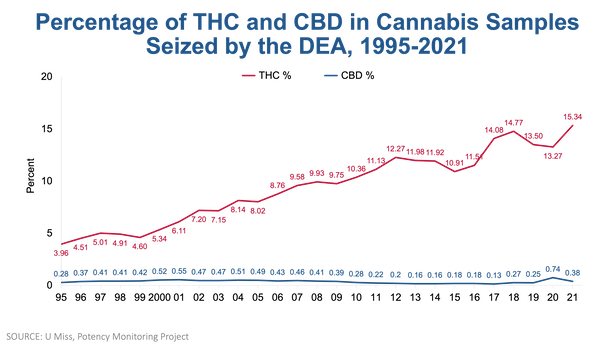
This is often overlooked – and many people who smoke weed regularly (or for a long time) are now experiencing serious withdrawal problems when they try to quit weed.
2. ZERO WEED DETOX
It’s crazy, but most people trying to quit weed do nothing to help detoxify. Detox is more important in marijuana than in any other drug… This is because the chemicals in weed have an ability to stay in your body for a long time.

Weed is completely different to any other drug…
Because after getting you high:
Metabolites of marijuana store in the fat cells of your body and stay there for months!
While still inside your body, THC & CBD is released slowly back into your bloodstream giving you a lack of focus, emotional mood swings, lower energy, headaches, stomach pains, and even sometimes a feeling of still being stoned, even if you haven’t smoked for days or even weeks….
But worst of all?
Cravings to smoke more weed.
If you smoke weed regularly or for a long time (or both) you already have a build up of toxins in your body. Detox that is specifically designed for weed, will flush your system of built up metabolites in your fat cells. Removing this crap helps you reduce cravings that are created in your body, often months after you quit.
But let’s talk about your main problem:
3. WEED IS THE MONSTER NINJA ADDICTION
People think weed is not a big deal… and that’s exactly what makes it so damn powerful. It’s the ninja addiction. It creeps up on you slowly, until you smoke it every day, multiple times, for years or decades at a time because…
…the chains of addiction are too light to be felt, until they are too strong to be broken.
THEN WEED BECOMES A MONSTER

Marijuana is a mostly a psychological addiction.
A physical addiction is actually easier to quit. With a physical addiction you can cut back slowly. You can reduce your dosage a little bit each day, until your cravings slowly reduce to a level you can tolerate. I’m not saying it is easy to quit a physical addiction, but at least those people have a strategy to follow!
Not so, with weed smokers…
You cannot rely on reducing your usage, because your cravings come from your thoughts.
When you fight your cravings with willpower, it becomes stressful…
…and we all know how you’ve learned to deal with stress… right?
SO WHAT IS THE BEST WAY TO QUIT WEED?
The best way to quit weed is both in body and mind.
That means to re-establish the way you think about pot, while (at exactly the same time) having a marijuana-focused detox to flush metabolites from your body. This isn’t a long process and is great for your health.
It is also the most successful method to quit smoking pot ever discovered.
Once you think about weed differently, and detox denies your body of any cravings or withdrawals, you will find yourself turning down weed offered to you, naturally. You will no longer want to buy or smoke weed.
It feels great…
Imagine it like this:
You have a clear mind & increased energy. Total focus, motivation, and clarity. Better health. Deeper relationships. More money. Plus, the new ability to turn down weed easily, and finally get ahead in life…
With this new ability, even the most seasoned weed smokers quit easily & permanently.
How would that change your life?
QUIT MARIJUANA THE COMPLETE GUIDE
Quit Marijuana
The Complete Guide
Helped Over 20,000 People In 32 Countries Quit Weed
Quit Marijuana The Complete Guide is the most popular program for people quitting weed online. It uses simple psychology to help you quit weed without willpower.
Here’s what you get:
How To Stop Wanting Weed
The biggest appeal to this program is the ability to stop wanting weed. If you don’t want it, then you don’t need willpower to quit.
How To Banish Cravings
Discover what your cravings, urges, and desires are — including an incredible number of little-known tips to help you overcome them
How To Stop Mental Fog
Gain clarity, focus, & motivation as you understand how to overcome brain fog
You get 24/7 personal 1-on-1 email support
Plus, you can chat with other people quitting weed privately with our private community with 10,000+ active members
Plus, 3 Bonus Quit Weed Programs
When you get The Complete Guide, you also get access to a natural weed detox program, a video program, and an audio program.
THIS NOW FAMOUS GUIDE HAS HELPED OVER 20,000 PEOPLE QUIT WEED IN THE PRIVACY OF THEIR OWN HOME
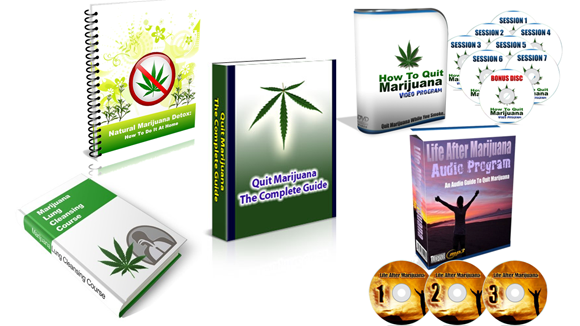
Get Quit Marijuana The Complete Pack
Quit Marijuana The Complete Pack includes The Complete Guide, Video Program, Audio Program, Detox Program, and private community support. This program has sold for $99, but you can gain access to the complete pack for ONLY $47 (a one-time payment with a 60 day money back guarantee).
USE CODE FOUR20 FOR A $52 DISCOUNT IN JUNE!

BONUS #1
NATURAL MARIJUANA DETOX
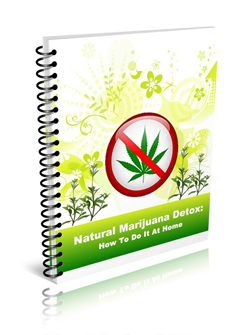
Natural Marijuana Detox
(Valued at $67.00 – free bonus)
In order to detox your body properly, you will be using special detoxifying agents, natural products, vitamins, fresh herbs, and some rare homely ingredients.
This course also includes:
Quit Weed & Succeed: Detox meal plans designed for people quitting weed so you do a complete weed detox yourself, at home.
- Defuse your addiction to reduce cravings and gain energy
- Repair and protect your liver through the detox period
- Avoid post-marijuana depression or “quit weed blues”
- Assist blood cells to carry oxygen through your body
- Eliminate all marijuana metabolites in your body
- Feel healthier & gain energy when you wake up
- Kick-start your natural physical healing process
- Mother Nature’s way – everything is 100% natural
- Options suitable for vegetarians and vegans
MORE TESTIMONIALS
BONUS #2
LIFE AFTER MARIJUANA
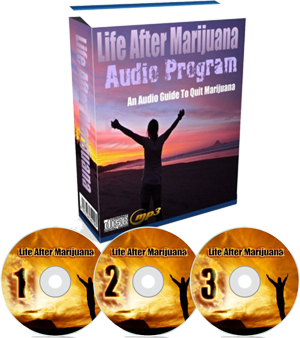
Life After Marijuana Audio Program
(Valued at $67.00 – free bonus)
1st Session (26:45)
You don’t need to quit weed yet. Listen to this session right away. This session will cause you to see your relationship to weed differently – exactly what you need in the beginning.
2nd Session (37:20)
Listen to this session the day you quit weed. It gives you clear advice about what to expect when you quit and how to deal with each situation from cravings, to your social life, to withdrawals. You also get a solid plan to deal with each one.
3rd Session (23:07)
This session is designed to leave you not only completely free of marijuana and addiction, but also hungry for a new life of success – whatever that means to you. This session is about life after marijuana, and goes above and beyond weed.
Bonus Session (57:49)
In this session 10 of us get together to discuss quitting weed almost 10 years after we quit. We go through the benefits of life and how we overcame all the obstacles along the way that stop most people.
MORE TESTIMONIALS
Enjoyed the audio
“I’m really learning a lot and feel this was money well spent. Ive really enjoyed the audio’s! love your Australian accent! Thanks for sharing your wisdom and truth. You’re always on time with your emails.“

BONUS #3
HOW TO QUIT MARIJUANA VIDEO PROGRAM
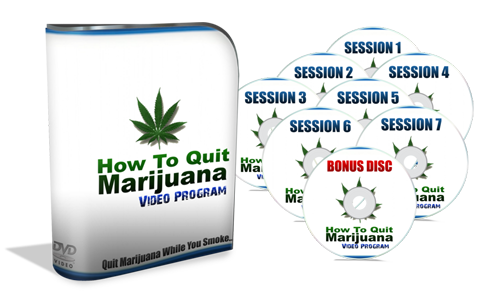
How To Quit Marijuana Video Program
(Valued at $127.00 – free bonus)
7 Modules, Each With A Specific Purpose.
This video program is unique because subliminal messaging is built into this program. That means while you learn about weed affects your life, you will also become empowered to escape this “monster addiction” yourself, consciously and unconsciously.
The bonus disc has 1 popular live webinar replay.
Discover how an ex-drug dealer went from smoking weed for 13 years to quitting in a heartbeat. This is the place all of the most frequently asked questions have been answered.
MORE TESTIMONIALS
Thanks so much for writing and answering my question mate!
“Hey Tristan,
Thanks so much for writing and answering my question mate! Your honesty just makes me wanna appreciate and respect you even more. Thanks so much for that. It just makes me want to give up ritualistic smoking even more… More than ever before. I’m riding on this and setting a quit date soon. Thank you so much, you Sir, are a real hero!
Regards, Prajwal”
FROM THE AUTHOR

Tristan Weatherburn
1st January, 2026
Helping people quit weed since 2009
I started smoking weed daily when I was 13 – and it didn’t stop until I was 27.
14 years every day – HIGH!
Wanna know the dumbest part?
I was hopelessly trying to quit for years.
Many people told me weed wasn’t addictive, which is pretty common and had me confused at the time. I was all like “why the hell was I having trouble quitting this non-addictive natural drug?”
If you’ve been told the same crap, think about alcohol for a second:
Most people drink socially.. take it or leave it… right?
But you also have your alcoholics, don’t you?
Yes, of course you do. But there is nothing evil about alcohol itself. These guys just drink waaaay too much – all the damn time – and it ruins many lives (not just their life but many lives around them too).
Well, I was kinda like the “alcoholic” of weed, and now I know for a fact:
Many people are like I was.
You just keep smoking weed every day, not to get high but just to feel normal.
While you lose:
- Motivation
- Clarity
- Focus
Every day…
Month after month.
Year after year.
Decade after decade. Until eventually, your excitement for life is slowly extinguished. That’s what I went through for years, and I wouldn’t wish it on my worst enemy… But I don’t hate weed itself.
My beef is with the “weed habit” only.
This “weed habit” is a ninja addiction that affects millions…
But I got lucky:
These days I enjoy a clean life, without weed.
I have no addiction. I can think clearly, and I can make decisions quickly. I look and feel great, and I enjoy more confidence and overall happiness in my life. My decade-long problem vanished.
And, I know why.
It is because I learned the “psychology of self-discipline” instead of just “trying to quit” over & over again for years. I became obsessed with self-development, especially when applied to addiction. I’ve put everything based on this psychology (and also weed-related) into this resource to help you do exactly the same thing.
Let me expose an example:
Are you still unsure if you should quit weed?
Like…
…do you have mixed feelings about it?
Yeah, of course you do.
Welcome to the ninja addiction…
…you still believe weed has benefits in your life, otherwise you wouldn’t have a problem quitting weed. But you do have a problem quitting weed, and that’s why you are still carefully reading this page. Maybe you are worried or even fearful about losing the comfort weed brings you so easily, regularly, predictably, reliably, chemically, stupidly and so damn often…
Enough!
I know how you feel because I felt the same way.
To make it simple just start with one question:
- Have you ever tried to quit weed before?
- And then failed?
- More than once?
Then don’t overcomplicate it.
If you’ve tried to quit weed before, and you’ve failed, then you have a problem.
Full stop.
Hands down.
Don’t allow your addiction to bargain with you.
You know you should be more successful.
But you aren’t…
…and most people in your position are held back by weed but do nothing about it — for decades — they just continue smoking weed to escape the problem that weed is actually causing. This is what we call “The Downward Spiral” and most regular smokers get stuck in what we call “Analysis Paralysis” mode.
They never take action…
They think too much…
But for some reason, they never think to blame their weed habit.
There is no doubt in my mind that if you want to see the potential in your life explode (beyond anything you could possibly imagine right now smoking weed every day) then all you need to do is quit weed…
This isn’t up for debate.
But Are You Ready?
I don’t mean ‘saying you want to quit weed‘ and then getting high again the next time your friend offers you some. I’m talking about the fact you might not ‘feel’ like you are ready…
But I also know you are 100% ready right now.
Without a doubt…
Whatever excuse you are telling yourself we can overcome.
You are ready.
It is not strange that you are still here, carefully reading this page.
It isn’t some fluke that you’ve just found a foolproof plan to quit weed that has already worked for over 20,000 people. It isn’t a coincidence that everywhere you look online you will find positive feedback about ‘Quit Marijuana The Complete Guide’ because it has worked for thousands of people in your position already.
Why would you be any different?
And, to make damn sure you get real results, I’ve included some other courses:
- Natural Marijuana Detox
- Life After Marijuana Audio Program
- Quit Marijuana Video Program
You’ll also get a bunch of programs I haven’t even mentioned…
Like the Lung Cleansing Course (to help clear your lungs) and Marijuana Sleep Control (to help you sleep without weed) Marijuana Memory Control (to improve your memory) and, the most popular program, Quit Weed Timeline (that will stay with you for the full challenge of quitting weed for 30 days). These are separate programs (completely unique courses on their own) with their own real-world strategies & walk-throughs.
I have done all I can to get back everything weed took from you, including your relationships, your health, and even your money…
I mean think about it…
…what is the cost of NOT quitting weed?
How much do you spend on weed in just one month?
Too stoned to work it out?
Do it anyway…
Be honest with yourself and answer the damn question:
How much of your MONTHLY cash-money goes ‘up in smoke’ every single damn month?
$50? $100?? $300???
$500??? $1,000??!!#??
More?!?
I’m not going to ask you how much you’ve spent in your lifetime. I’m not even going to bring up how much time you’ve wasted chasing weed, smoking weed, or just being high and unproductive when you smoke it.
I’m won’t bring up how much more you could have earned if you were sober.
I’m sure we already agree:
NOT quitting weed is costing you a fortune!
But it isn’t even about money… is it?
It isn’t even about the sleepless nights or the painful withdrawals…
They are just weak excuses your brain desperately comes up with.
How much has being high cost you in your life – so far?
- In your actual income?
- In your friends & family?
- In your physical health?
- In your mental health?
- In your appearance?
- In your career or education?
- In your ability to think clearly?
- In your ability to handle emotion?
- In your relationships – with the people you love?
- In your ability to provide for yourself – or anyone?
- In you?
It’s sad.
When you smoke weed all the time, it destroys your motivation and puts your blinders on. It plays a massive role in your life and there is no good excuse to justify any of it, besides your own selfish pleasure.
The scary part is…
Sometimes you can’t even see it…
And There Is An Obvious Solution…
The obvious solution is to quit weed (just for now) so you can evaluate the situation sober. That means you only need to quit for 30 days, and when you finally do quit smoking weed for 30 days, it will become obvious that quitting weed was — without a doubt — 100% the correct choice. Then we can take it from there..
You only need to make the decision.
And, right now you have that decision to make:
1. You can continue smoking weed until you want to quit again.
(it could take weeks, months, or years, but it always comes up again)
2. You could try to quit on your own, yet another time.
“Insanity is doing the same thing over and over again and expecting different results”
– Albert Einstein
3. Or you can learn how to quit weed with me today, from someone who has done it themselves and has now also helped over 20,000 people quit weed – and also receive real-world instant advice from 8,000+ other people in our private community support group.
Plus, with my method, you can continue smoking weed (for now) as we work together to change how you think about weed, and how you perceive being stoned.
Then, you can quit weed in your own time, on your own terms…

THE FULL QUIT WEED PROGRAM
Quit Marijuana: The Complete Guide
Quit Marijuana Video Program
Life After Marijuana Audio
Natural Marijuana Detox
Private Facebook Group
Yes, I offer a 60 day money-back guarantee:
After 20,000 people, I’m confident this will work for you.

If you’re not convinced my program helped you quit weed, then just ask for your money back. It’s easy too, just send me (Tristan) an email tristan@evolvealready.com or even just DM me on Instagram and let me know. Less than 1% of folks do this and I honor every single request.
MORE TESTIMONIALS
FREQUENTLY ASKED QUESTIONS